Strati_FT6 Pre Congress 

Strati_FT6 Pre Congress 

The contribution of the Umbria-Marche pelagic succession (central Italy)

to the Cretaceous-Paleogene Time Scale (and beyond)

Field Trip leaders/co-leaders: S. Galeotti (University of Urbino ‘Carlo Bo’); I. Premoli Silva (University of Milan)
Duration: 3 days, 29th June-1st July
Meeting point/time: Pesaro, railway station 8:30
Ending point/time: Milan, late afternoon
Quote included: 2 night hotel/ 3 packed lunch / 2 dinner / Insurance/ 3 day bus back to Milan
Quote not included: flight
Price: 630€
Minimum number of participants20

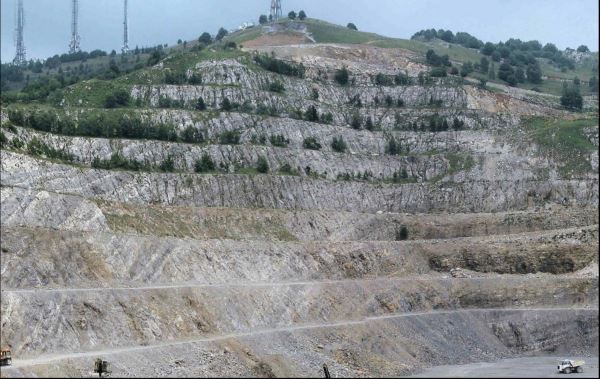
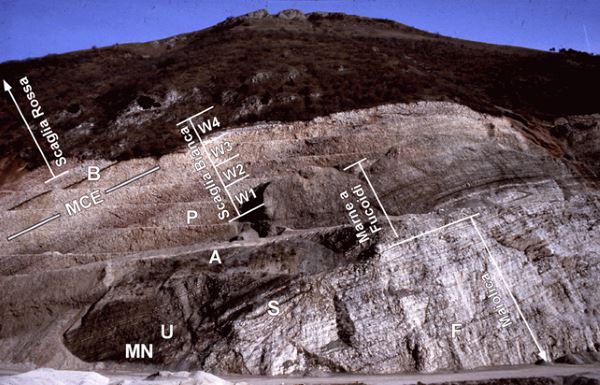
The excursion will focus on the Cretaceous to Paleogene pelagic succession of the Umbria-Marche (U-M) Basin well exposed along two well-known sections, the Bottaccione and Contessa sections near Gubbio. The remarkably almost continuous deposits at Bottaccione contributed a pivotal development of the Cretaceous–Paleogene geomagnetic reversal stratigraphy. Detailed calcareous plankton biostratigraphy allowed the micropaleontological calibration of more than 100 Myr of geomagnetic polarity stratigraphy, which in turn was used to date the marine magnetic anomaly sequence. The Bottaccione section is the locality where the well-known Iridium anomaly at the Cretaceous/Paleogene (K/Pg) boundary was measured for the first time, providing evidence for a large “asteroid” impact at the time of the K/Pg mass extinction. The U-M succession outcropping in the Apennines of central Italy provides a remarkably continuous stratigraphic record of pelagic and hemipelagic Cretaceous strata including the organic-rich deposits of the Marne a Fucoidi (Aptian-Albian) and the Scaglia Bianca (Albian-Cenomanian) formations. Here, the sedimentary expression of the Cretaceous Oceanic Anoxic Events (OAEs) as Livelli Selli (Aptian – OAE1a) and Bonarelli (latest Cenomanian – OAE2) have been first described.  The U-M succession has also been a playground for the identification of orbital forcing in pre-Quaternary deposits, which has been investigated in these classical units by many authors since the early ‘80’s contributing critical insights into the understanding of the sensitivity of greenhouse climate systems of the Albian-Cenomanian and Eocene to orbital forcing. The Massignano section near Ancona is the Global Stratotype Section and Point for the Eocene/Oligocene boundary.

 Difficulty and additional notes: low; all outcrops are accessible by bus.Hiking shoes, safety googles and rain coat required. Be aware that summer temperature may be particularity hot in Italy and you may need to protect your eyes and skin from the sun.
Fill in the form and email it to strati2019@eravelservice.com to sign up for a field trip. In case of cancellation of a field trip for low number of participants, there will be the  possibility to participate in another field trip. You may indicate your alternative choices (2 field trips at maximum) within the registration form.

The registration ends on 17 March 2019

Strati_FT 7 Pre Congress

Strati_FT 7 Pre Congress

The Lower Pleistocene Arda River marine succession (Northern Italy)

Field Trip leaders/co-leaders: G. Crippa, F. Felletti and M. Marini (Università di Milano, Italy); G. Raineri (Parco Regionale dello Stirone e del Piacenziano); C. Francou (Museo Geologico Giuseppe Cortesi di Castellarquato, Italy)
Duration: 1 day, 1st July
Meeting point/time: Milan, Centrale railway station 8:00
Ending point/time: Milan, late afternoon
Quote included: 1 lunch/1 day bus/Insurance
Price: 120€
Minimum number of participants23

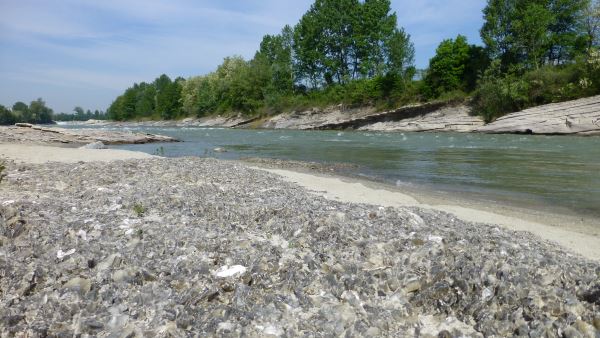
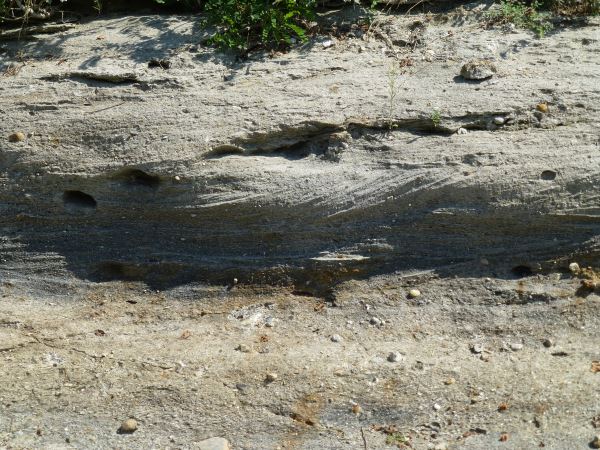
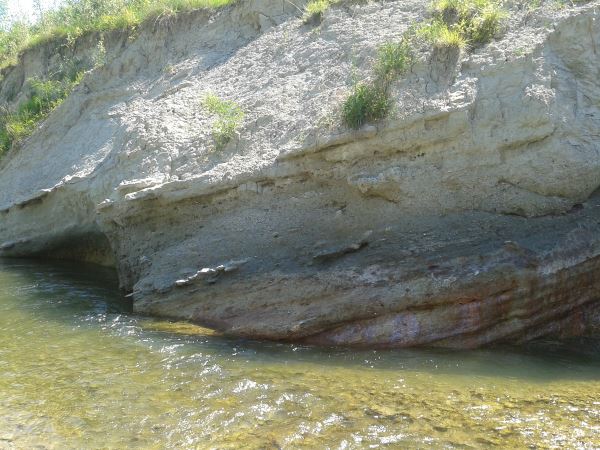
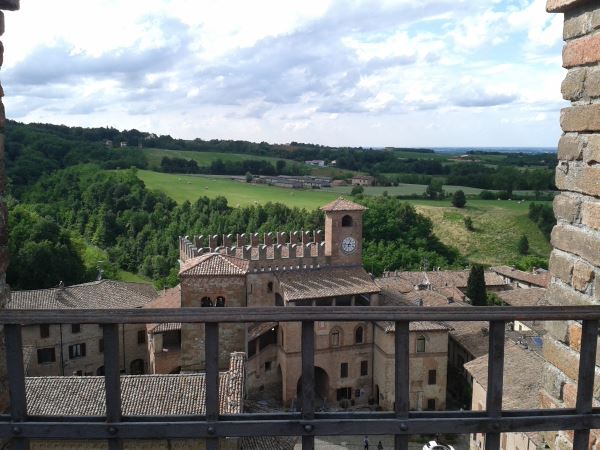
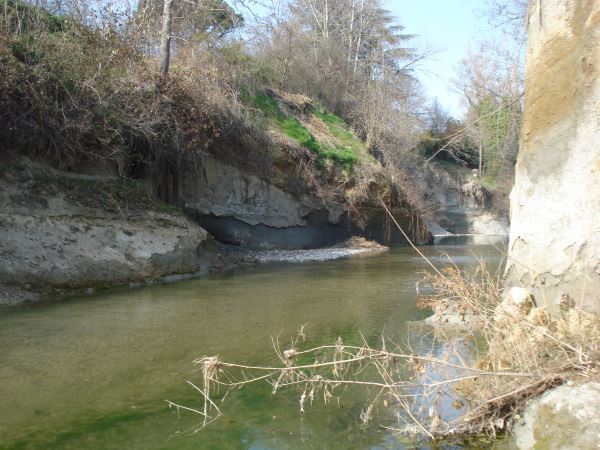
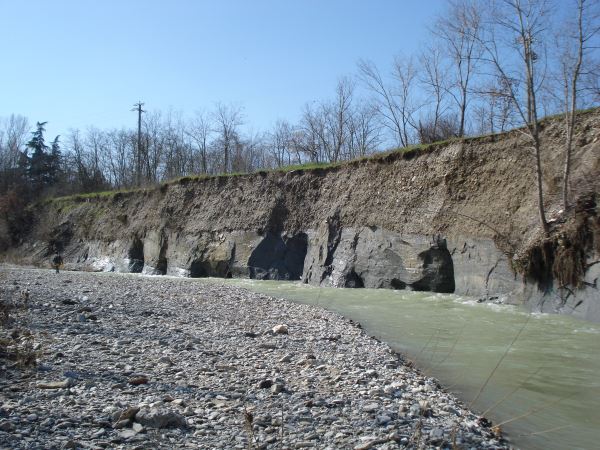
This excursion will lead you to a Pleistocene marine succession in the wonderful natural landscape of the Arda River in western Emilia, northern Italy. The excursion will be complemented by the visit to the geological-palaeontological museum and the medieval town of Castell’Arquato. Participants will enjoy scientific and historical sites and, of course, very good Italian food.

Difficulty and additional notes: medium; participants will be walking within the river bed which on summer is at low level.
Hiking boots, safety googles and rain coat required. Be aware that summer temperature may be particularity hot in Italy and you may need to protect your eyes and skin from the sun.
 

Fill in the form and email it to strati2019@eravelservice.com to sign up for a field trip. In case of cancellation of a field trip for low number of participants, there will be the  possibility to participate in another field trip. You may indicate your alternative choices (2 field trips at maximum) within the registration form.

Strati_FT 8 Pre Congress 

Strati_FT 8 Pre Congress 

The pelagic succession of the Lombardy Basin:

a Jurassic journey at Colle di Sogno

Field Trip leaders/co-leaders: E. Erba, F. Jadoul and C. Bottini (University of Milan)
Duration: 1 day, 1st July
Meeting point/time: Milan, Centrale railway station, 8:00
Ending point/time: Milan, Centrale railway station, 19:00
Quote included: 1 lunch/1 day bus/Insurance
Price: 120€
Minimum number of participants: 23

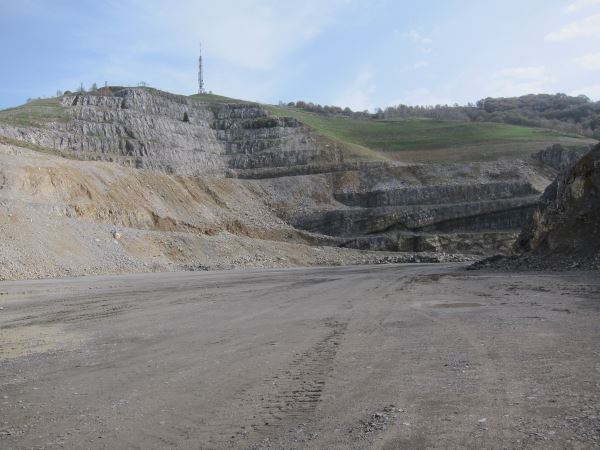
The excursion is dedicated to the stratigraphy of the Jurassic pelagic succession of the Lombardy Basin. We will visit:

  • In the Valcava sections the Triassic/Jurassic boundary interval;
  • at Colle di Sogno the continuous Sinemurian-Tithonian succession;
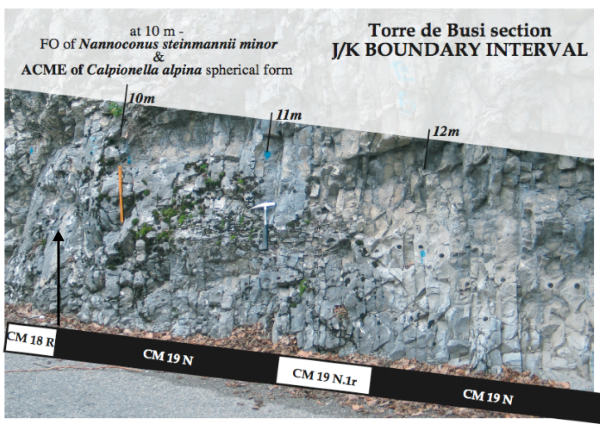
  • at Torre de Busi the Tithonian-Berriasian interval, including a continuous Jurassic/Cretaceous boundary interval.

All sections were studied through integrated stratigraphy: lithostratigraphy, nannofossil, l dinoflagellates (T/J) and calpionellid (J/K) biostratigraphy, magnetostratigraphy, and chemostratigraphy.
In addition to the Jurassic history of the southern Tethys margin, the field trip will include the analyses of the type section of the Sogno Formation, including the black shale interval corresponding to the Toarcian Oceanic Anoxic Event.

Difficulty and additional notes: low, no hiking necessary; the visit of the T/J boundary section is not guaranteed since it depends on the access conditions imposed by the Italcementi Quarry.
Hiking shoes safety googles and rain coat required. Be aware that summer temperature may be particularity hot in Italy and you may need to protect your eyes and skin from the sun.
 

Strati_FT 9 Post Congress

Strati_FT 9 Post Congress

The record of the Messinian salinity crisis in the Piedmont Basin (NW Italy):  stratigraphy, sedimentology and geomicrobiology

Field Trip leaders/co-leaders: F. Dela Pierre, F. Lozar, M. Natalicchio (University of Torino, Italy)
Duration: 2 days, 6th-7th July
Meeting point/time: Milan, Centrale railway station 7:00
Ending point/time: Milan, late afternoon
Quote included: 1 night hotel/ 2 packed lunch/1 dinner/ Insurance /2 days round trip from Milan
Price: 450€
Minimum number of participants: 25

The fieldtrip aims at illustrating the stratigraphic architecture of the record of the Messinian salinity crisis in the Piedmont Basin, with particular emphasis on the lateral facies variations between the shallow marginal areas of the basin and the depocentral zone. We will discuss in the field the relationships between the different gypsum lithofacies and their microbiologic contents, which is represented by both body fossils and molecular fossils, with the main aim to unravel the paleoenvironmental conditions under which Messinian evaporites were deposited. We will visit:

  • Messinian primary sulfate evaporites (Primary Lower Gypsum unit) deposited during the first phase of the crisis;
  • The deep-water equivalents of primary evaporites which are represented by organic rich shales and laminated marls rich in filamentous microfossils;
  • Clastic gypsum deposits deposited at the acme of the Messinian salinity crisis
  • Continental and lacustrine facies (“Lago Mare”) representing the final stage of the crisis.

 Difficulty and additional notes: low; all outcrops accessible with a short walk on easy paths.Hiking boots, safety googles and rain coat required. Be aware that summer temperature may be particularity hot in Italy and you may need to protect your eyes and skin from the sun.
Fill in the form and email it to strati2019@eravelservice.com to sign up for a field trip. In case of cancellation of a field trip for low number of participants, there will be the  possibility to participate in another field trip. You may indicate your alternative choices (2 field trips at maximum) within the registration form.

Strati_FT 16 Post Congress 

Strati_FT 16 Post Congress 

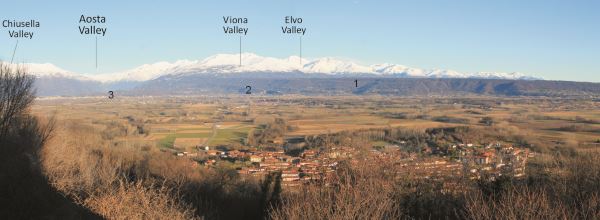
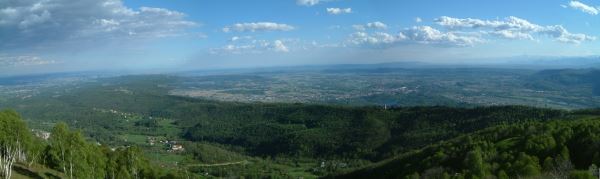
The Quaternary interglacial-glacial cycles recorded in the Ivrea Morainic Amphitheatre, the most notable end-moraine system in the European Alps (latest Early Pleistocene-Late Pleistocene, Piedmont, Italy).

Field Trip leaders/co-leaders: F. Gianotti (University of Torino, Italy)
Duration: 1 day, 6th July
Meeting point/time: Milan, Centrale railway station 7:30
Ending point/time: Milan, 18:30
Quote included: 1 lunch/1 day bus/Insurance
Price: 120€
Participants: 23

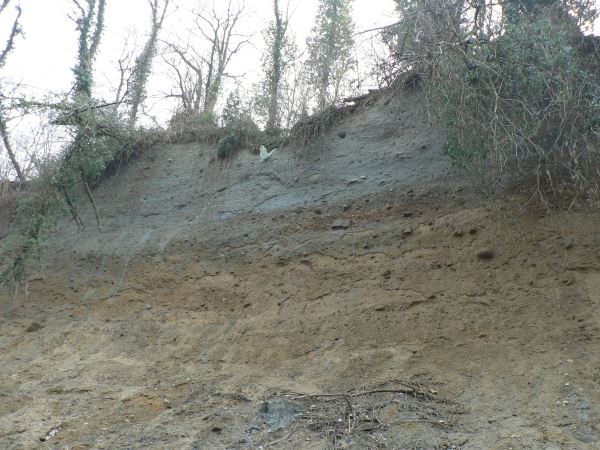
The one-day trip will focus on geomorphology, stratigraphy and archaeology of the Morainic Amphitheatre of Ivrea. Formed during the nine interglacial-glacial cycles (900-20 ka BP, from the MIS 22 to the MIS 2), the different glacigenic units are identified through the pedostratigraphy and the finding of buried marker levels (palaeosols and interglacial/interstadial lacustrine-palustrine deposits). We’ll walk through a large sequence of ancient lateral moraines, from the oldest to the youngest, until we’ll reach the crest of the Serra of Ivrea, formed in the last glaciation, that is the largest moraine in the Alps. The field trip also includes a visit in the oldest sector of the amphitheatre where the enormous mine dumps of the Bessa gold placer (10 km2) are preserved, dating back to Roman age (II-I century BC).

Difficulty and additional notes: medium; hiking on very steep and bumpy firebreak tracks.Hiking boots, safety googles and rain coat required. Be aware that summer temperature may be particularity hot in Italy and you may need to protect your eyes and skin from the sun.
 

Fill in the form and email it to strati2019@eravelservice.com to sign up for a field trip. In case of cancellation of a field trip for low number of participants, there will be the  possibility to participate in another field trip. You may indicate your alternative choices (2 field trips at maximum) within the registration form.